An Alternative Approach to Amide Bonds
— Especially When It's Difficult
DMTMM coupling reagents activate carboxylic acids for amide bond formation across aqueous, organic, and mixed-solvent systems — with cleaner reaction profiles, reduced side products, and improved conversions where standard reagents fall short.
Peptide Synthesis & Lipidation
Economical SPPS alternative to PyBOP/HATU. Cleaner acylation for GLP-1 class peptides.
Aqueous Bioconjugation
Published advantages vs EDC/NHS in water: reduced pH sensitivity, no pre-activation required.
DEL / On-DNA Chemistry
PF₆ shows higher conversion than HATU for on-DNA amidation in published comparisons.
Why Switch
Where DMTMM Offers Advantages
Claims below reference published comparative data where available. DMTMM is not universally “better” — it wins in specific, well-characterized scenarios where incumbent reagents have documented limitations.
Aqueous Coupling
Amide bond formation in water or mixed aqueous-organic systems
EDC / NHS limitation
O-acylisourea intermediate rapidly hydrolyzes or rearranges to irreversible N-acylurea ; EDC reagent half-life ~3.9 h at pH 5.0 in MES buffer. At manufacturing scale, EDC conjugation yields are often <20% . Requires tight pH control (optimal 3.5–4.5) and timing .
DMTMM advantage
Stable activation in water without pH shifts. Higher substitution at matched feed ratios in systematic comparisons on hyaluronan. Water-soluble byproducts simplify workup.
Lipidation / Side-Chain Acylation
Fatty diacid attachment for GLP-1-class peptides (C18/C20 linkers)
HATU / HBTU limitation
Over-acylation side products, guanidinylation risk with uronium reagents, complex purification burden
DMTMM advantage
Mechanistically avoids guanidinylation risk; chemically plausible for cleaner lipidation profiles based on general amide coupling evidence. DMTMM forms amide bonds to lysine ε-amino groups in cross-linking contexts and BSA conjugation , but no published manufacturing-scale DMTMM lipidation data is yet available.
DEL / On-DNA Chemistry
Amide bond formation on DNA-conjugated substrates in aqueous conditions
HATU limitation
Limited conversion with sterically hindered partners, restricted building-block scope
DMTMM advantage
PF₆ achieves higher on-DNA amidation conversion than HATU or DMTMM·Cl in optimized protocols (20–50 eq), especially with hindered partners. Many DEL workflows use higher reagent excess.
Solid-Phase Peptide Synthesis
Routine and difficult couplings in Fmoc SPPS
PyBOP / HBTU limitation
High reagent cost at catalog scale, guanidinylation risk (uronium class), epimerization with standard base pairings
DMTMM advantage
Economical alternative to PyBOP with comparable yields. BF₄ variant shows improved diastereomer ratios in specific model systems with appropriate base selection (NMM). Faster fragment coupling than TBTU or HATU. Note: BF₄ has limited solubility in pure DMF.
Polymer / Materials Functionalization
Surface amidation on cellulose, nanofibrils, hydrogels, or coatings
EDC / NHS limitation
Persistent coupling-agent byproducts (N-acylurea residues) on surfaces, even after extensive washing.
DMTMM advantage
Water-soluble byproducts reduce surface contamination risk. Stable intermediates allow robust amidation in protic solvents. Water-soluble reagent and byproducts.
Bioconjugation / ADC Chemistry
Protein, antibody, or nanoparticle functionalization in aqueous buffers
EDC / NHS limitation
pH gymnastics (EDC optimal at pH 3.5–4.5 vs amine reactivity at neutral pH ), poor reproducibility at scale (<20% conjugation yield reported for vaccine conjugates )
DMTMM advantage
Higher modification efficiency on carboxyl-functionalized substrates in published comparisons. Reduced pH sensitivity vs EDC/NHS. One-pot activation by simple mixing.
A note on alternatives: For a complete coupling reagent evaluation, scientists should also consider modern alternatives such as COMU, Oxyma/DIC, T3P, and DEPBT, which address different aspects of coupling chemistry. DMTMM’s unique advantages are strongest in aqueous/protic media and on-DNA applications where these alternatives are less applicable.
Application Guide
Which DMTMM Salt Is Right for Your Application?
Select your application context to see the recommended salt, conditions, expected outcomes, and a link to the full protocol.
Solid-Phase Peptide Synthesis
Peptide Process Chemist
Cleaner couplings, lower epimerization, economical alternative to PyBOP
Suggested Conditions
NMP or DMF/NMP mixtures (BF₄ has limited solubility in pure DMF)
1.5–3.0 eq relative to amino acid
Room temperature (20–25 °C)
30–60 min per coupling cycle
Salt Rationale
The tetrafluoroborate counterion provides enhanced stability in organic solvents and supports the “superactive ester” activation mechanism. Literature reports 80–100% yields with high enantiomeric purity in demanding dipeptide and fragment condensation settings. Note: BF₄ has limited solubility in pure DMF; NMP or DMF/NMP mixtures may be needed.
Expected Outcomes
- 1Coupling efficiency comparable to PyBOP/HATU
- 2Lower epimerization vs HATU/HBTU + DIPEA in specific model systems with appropriate base selection
- 3Faster coupling than TBTU in fragment condensation
- 4Purer crude product vs TBTU or PyBOP (automated SPPS)
Key Advantage
BF₄ variant demonstrated significantly faster fragment synthesis than TBTU or HATU, and automated SPPS produced purer product than TBTU or PyBOP in published comparisons (Kamiński et al., 2005).
vs PyBOP / HATU: comparable or better yields at lower cost, without guanidinylation risk of uronium reagents
Scientific Evidence
Mechanism, Data & Literature
DMTMM activates carboxylic acids via an acyloxytriazine intermediate that is significantly more persistent in aqueous media than EDC’s O-acylisourea — a fundamentally different pathway from carbodiimide activation.
DMTMM Activation Pathway
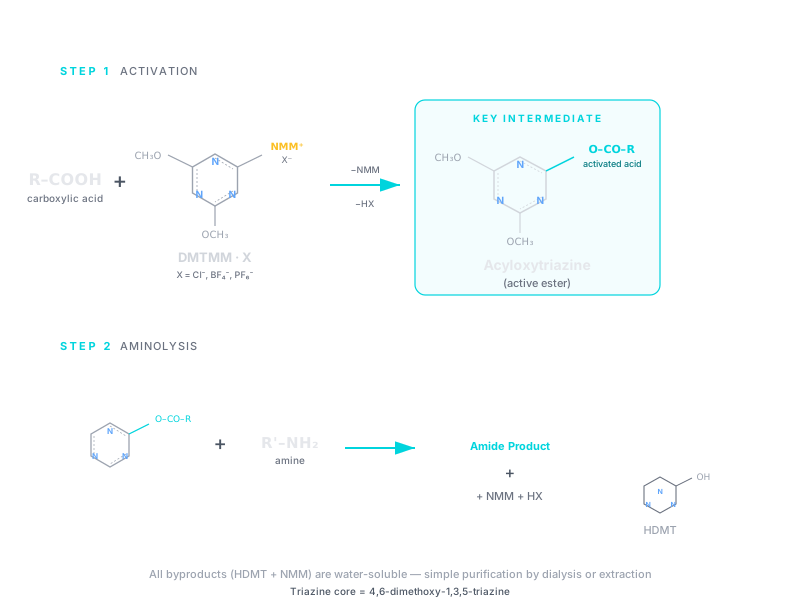
DMTMM converts carboxylic acids to acyloxytriazine active esters. These intermediates are significantly more persistent in aqueous media than EDC’s O-acylisourea and react cleanly with amines to form amide bonds. Byproducts (hydroxy-dimethoxytriazine + N-methylmorpholine) are water-soluble. Note: triazine adducts with phenol groups (tyrosine/tyramine) can form and are not removed by dialysis.
Why This Matters vs EDC/NHS
Intermediate Stability
DMTMM
Acyloxytriazine: significantly more persistent than O-acylisourea in aqueous media
EDC/NHS
O-acylisourea: rapidly hydrolyzes or rearranges to N-acylurea; EDC reagent half-life ~3.9 h at pH 5.0
pH Requirements
DMTMM
Functional across pH 6\u20138 without pH shifts
EDC/NHS
EDC activation optimal at pH ~4\u20136; amine reactivity optimal at pH >7. Requires pH compromise or multi-step approach.
Pre-activation Step
DMTMM
None \u2014 one-pot, mix-and-react
EDC/NHS
NHS ester pre-activation typically required for aqueous coupling
Surface Residues
DMTMM
Water-soluble byproducts, reduced surface contamination risk
EDC/NHS
N-acylurea residues can persist on surfaces even after extensive washing
Key Experimental Findings
Data sourced from published comparative studies and independent evaluations.
Key Insight
DMTMM shows advantages vs EDC/NHS for carboxyl–amine coupling in water
Experimental Result
In systematic hyaluronan functionalization comparisons, DMTMM produced higher degrees of substitution across tested substrate classes (small amines, multifunctional moieties, proteins, and therapeutic conjugates) at matched feed ratios — with reduced pH sensitivity compared to EDC/NHS.
EDC reagent half-life in MES buffer at 25 °C: ~3.9 h at pH 5.0, ~20 h at pH 6.0, ~37 h at pH 7.0 (Gilles et al., 1990). The O-acylisourea intermediate is transient and competes with N-acylurea rearrangement.
,
Key Insight
DMTMM·BF₄ reduces epimerization vs HATU/HBTU + DIPEA in specific model systems
Experimental Result
In a dedicated SPPS comparative study, DMTMM·BF₄ with NMM produced higher “correct diastereomer” percentages than common uronium + DIPEA pairings. Base selection (NMM over DIPEA) is critical for this advantage.
Triazine BF₄ variants achieved 80–100% yields with high enantiomeric purity in demanding dipeptide and fragment-condensation settings (Kamiński et al., 2005). Note: BF₄ has limited solubility in pure DMF; NMP or co-solvent mixtures may be required.
Key Insight
DMTMM·PF₆ shows higher conversion than HATU for on-DNA amidation
Experimental Result
Hosozawa et al. (2024) report DMTMM·PF₆ achieves higher on-DNA amidation conversion than HATU or DMTMM·Cl, particularly with sterically hindered partners, using 20–50 eq in optimized protocols.
This is a tightly scoped, high-confidence claim that DEL teams can validate quickly. Note that the 20–50 eq stoichiometry is from optimized conditions; many DEL workflows use significantly higher reagent excess.
Key Insight
≥99% purity reduces impurity mass loading by 80% vs 95% grade
Experimental Result
At 1 kg scale with ≥1 equivalent coupling reagent: 95% purity introduces 50 g impurities vs 10 g at 99% purity. These reagent-derived impurities become the hardest-to-remove “process noise” that increases purification burden.
Catalog-grade DMTMM·Cl is commonly sold at 95% (HPLC). Mironova supplies all salts at ≥99.0%. Reduced impurity loading can contribute to fewer purification cycles, lower solvent consumption, and shorter processing time.
Protocol Library
Experimental Protocols
Structured protocols with reagents, equivalents, conditions, and troubleshooting. Each protocol includes analytical monitoring guidance and printable formatting for lab use.
Reagents
Conditions
Procedure
- 1Swell resin in DMF (5 mL/g resin) for 15 min. Drain.
- 2Deprotect Fmoc group: treat with 20% piperidine/DMF (2 × 5 min). Wash resin with DMF (5×).
- 3Dissolve Fmoc-amino acid (3.0 eq) and DMTMM·BF₄ (3.0 eq) in minimum DMF.
- 4Add NMM (6.0 eq) to the solution. Mix briefly to ensure dissolution.
- 5Add activated solution to drained resin. Agitate (shaking or N₂ bubbling) for 30–60 min.
- 6Drain coupling solution. Wash resin with DMF (5×).
- 7Monitor coupling completion by Kaiser test (ninhydrin) or chloranil test. Recouple if necessary.
- 8Repeat deprotection–coupling cycle for each residue.
Expected Outcome
Coupling efficiency comparable to PyBOP/HATU in published comparisons (Kamiński et al., 2005). Lower epimerization than HATU/HBTU + DIPEA when using NMM as base. Crude purity typically improved vs TBTU or PyBOP in automated synthesis.
Troubleshooting
Incomplete coupling (positive Kaiser test)
Recouple with fresh reagent solution. Extend reaction time to 90 min. For very hindered residues, increase to 5.0 eq reagent.
Elevated epimerization
If using DIPEA as base, switch to NMM or collidine. Reduce coupling temperature to 0–10 °C for sensitive residues.
Poor resin swelling
Pre-swell in DCM before switching to DMF. Ensure DMF is fresh and dry.
Notes
- Store DMTMM·BF₄ in a desiccator. Weigh quickly to minimize moisture exposure.
- DMTMM·BF₄ has limited solubility in pure DMF. Use NMP or DMF/NMP co-solvent mixtures. Verify dissolution before adding to resin.
- For fragment condensation, 1.5 eq reagent with extended reaction time (2–4 h) is often sufficient.
- Base selection is critical for epimerization control: NMM or collidine are preferred. Epimerization advantages over uronium reagents were demonstrated in specific model systems (Kamiński et al., 2005).
- Compatible with standard Fmoc/tBu protection strategy.
Analytical monitoring: Kaiser/chloranil test after each coupling. HPLC and MS analysis of cleaved crude peptide.
Reagents
Conditions
Procedure
- 1Dissolve or suspend the carboxyl-bearing substrate in buffer at desired concentration (typically 1–10 mg/mL for polymers, higher for small molecules).
- 2Add the amine-bearing partner to the substrate solution. Mix to ensure homogeneity.
- 3Weigh DMTMM·Cl (calculated equivalents relative to carboxyl groups). Dissolve in a small volume of the same buffer.
- 4Add DMTMM·Cl solution to the reaction mixture. No pH adjustment is required.
- 5Stir or agitate at room temperature (or 37 °C) for 1–24 h depending on substrate reactivity.
- 6Purify by dialysis (MWCO appropriate for substrate), size-exclusion chromatography, or precipitation to remove byproducts and unreacted reagents.
Expected Outcome
Published comparisons report higher degrees of substitution vs EDC/NHS at matched feed ratios. Applicable across small amines, multifunctional moieties, proteins, and therapeutic conjugates. No pH shifts required during the reaction.
Troubleshooting
Low degree of substitution
Increase DMTMM·Cl equivalents (up to 10 eq for highly sterically hindered substrates). Extend reaction time to 24 h. Increase temperature to 37 °C.
Substrate precipitation
Reduce substrate concentration. Add co-solvent (up to 20% DMSO or MeOH is typically tolerated). Adjust buffer pH within 6–8 range.
Protein denaturation concerns
Work at room temperature. Limit DMTMM·Cl to 1–2 eq. Use phosphate buffer at pH 7.4.
Notes
- DMTMM·Cl is freely water-soluble — no pre-dissolution in organic solvent needed. Kunishima et al. (1999) reported 100% recovery of DMTMM·BF₄ after 3 h in water at RT, and Kunishima et al. (2001) described the active intermediate as “stable for at least one day” in aqueous media , .
- Unlike EDC/NHS, no separate pre-activation step is required. Loebel et al. (2015) successfully performed DMTMM-mediated coupling at 37 °C over 24–120 h with NMR-monitored gelation, demonstrating reagent competence under extended aqueous conditions .
- Byproducts (2-hydroxy-4,6-dimethoxy-1,3,5-triazine + N-methylmorpholine) are water-soluble and easily removed by dialysis.
- If conjugating tyramine or tyrosine-containing substrates, be aware that DMTMM can form covalent triazine adducts with phenol groups (Tyr-O-DMT), which may reduce overall substitution. Pre-activation and limiting DMTMM excess can help mitigate this .
- If using fluorescent labels: DMTMM forms irreversible adducts with xanthene dyes (fluorescein, rhodamine). Use cyanine-based fluorophores instead .
Analytical monitoring: Degree of substitution by ¹H NMR or colorimetric assay. HPLC or SEC for conjugate characterization. TNBS assay for free amine quantification.
Reagents
Conditions
Procedure
- 1If peptide has multiple free amines, ensure orthogonal protection so that only the target ε-lysine is available for acylation.
- 2Dissolve fatty diacid–spacer construct (1.5–2.0 eq) in DMF or DMF/water mixture at 0–10 °C.
- 3Add DMTMM salt (1.5–2.5 eq) and NMM (3.0–5.0 eq). Stir for 5–10 min to pre-activate the carboxyl group.
- 4Add the peptide (1.0 eq, dissolved in minimum DMF or buffer) to the activated acid solution.
- 5Stir at 0–25 °C for 2–8 h. Monitor by analytical HPLC.
- 6Quench by dilution with cold water or buffer. Purify by preparative HPLC.
Expected Outcome
Target: selective mono-acylation of target lysine with minimal over-acylation. These are expected outcomes based on general DMTMM coupling behavior; actual results require process-specific optimization (see notes).
Troubleshooting
Over-acylation (di-acylated product)
Reduce DMTMM equivalents to 1.2 eq. Lower temperature to 0 °C. Reduce reaction time. Ensure orthogonal protection of non-target amines.
Low conversion
Increase DMTMM equivalents. Extend reaction time. Ensure fatty acid is fully dissolved (add DMSO if needed for solubility).
Triazine adduct detected
Reduce DMTMM excess. This side product is typically separable by prep HPLC but is best minimized at the reaction level.
Notes
- These conditions are chemically plausible extrapolations from general DMTMM amide coupling data. DMTMM has been demonstrated to form amide bonds to lysine ε-amino groups in protein cross-linking contexts (Leitner et al., 2014 ), establishing chemical competence for carboxyl→lysine amide formation. Farkaš et al. (2013 ) further demonstrated DMTMM-mediated conjugation to BSA lysine residues. However, no published study has specifically demonstrated DMTMM for GLP-1 peptide lipidation at manufacturing scale. Users should treat this as an evaluation starting point.
- For semaglutide-class molecules, the lipidation step is quality-critical. Coupling-reagent choice directly affects the impurity profile.
- DMTMM mechanistically avoids the guanidinylation risk inherent to HATU/HBTU at this step.
- Batch-to-batch reagent purity (≥99%) is important for reproducible impurity profiles at scale.
Analytical monitoring: Analytical RP-HPLC (C18, gradient). LC-MS for identity confirmation. Monitor for di-acylated species and triazine adducts.
Reagents
Conditions
Procedure
- 1Prepare DNA–amine headpiece in borate buffer (100 mM, pH 9.4) at the desired concentration (typically 0.5–1.0 mM in DNA).
- 2Dissolve carboxylic acid building block (20–50 eq) in DMA or DMF.
- 3Add DMTMM·PF₆ (20–50 eq) to the building block solution. Add base (20–50 eq).
- 4Combine the activated acid solution with the DNA–amine solution. Vortex to mix. The final organic content should be 40–80% depending on DNA stability tolerance.
- 5Incubate at RT or 37 °C for 2–16 h (overnight is common for difficult substrates).
- 6Purify by ethanol precipitation. Analyze by LC-MS for conversion and product identity.
Expected Outcome
Published comparisons report higher conversion than HATU for on-DNA amidation, particularly with sterically hindered building blocks (Hosozawa et al., 2024). Broad substrate scope enabling expanded DEL chemical diversity.
Troubleshooting
Low conversion with a specific building block
Increase equivalents to 50 eq. Raise temperature to 37 °C. Extend time to 16 h. Try switching solvent system (DMA vs DMF).
DNA degradation
Reduce temperature. Decrease organic co-solvent fraction. Check buffer pH. Reduce reaction time.
Multiple product peaks in LC-MS
Check for acid chloride formation or anhydride side products. Reduce reagent excess. Ensure building block is pure.
Notes
- In published on-DNA amidation screens, DMTMM·PF₆ achieved higher conversion than HATU and DMTMM·Cl, particularly for sterically hindered partners (Hosozawa et al., 2024).
- The 20–50 eq stoichiometry reflects optimized protocol conditions from the above study. Many DEL workflows use significantly higher reagent excess (100s–1000s eq). Adjust based on your platform’s standard conditions.
- Screen a small panel of building blocks first to validate conditions before library-scale synthesis.
Analytical monitoring: LC-MS (oligonucleotide mode) for conversion quantification. UV/Vis for DNA integrity.
Troubleshooting
Common Issues & How to Fix Them
Practical guidance for the problems you actually encounter in the lab. Every solution below is derived from published data and real-world application experience.
Possible Causes
Insufficient reagent equivalents
DMTMM stoichiometry depends heavily on the application. On-DNA chemistry requires 20–50 eq; aqueous conjugation may need 5–10 eq for hindered substrates.
Moisture contamination
While DMTMM is water-tolerant for aqueous reactions, moisture in organic-phase reactions (SPPS, lipidation) can reduce activation efficiency. Ensure reagent is stored dry.
Wrong salt for the solvent system
Cl is optimal in water; BF₄ in polar organics; PF₆ in aprotic organics. Mismatched salt/solvent combinations reduce active concentration and reactivity.
Steric hindrance
Highly hindered substrates need longer reaction times, higher temperatures, or the PF₆ salt for maximum conversion.
Recommended Actions
- Increase DMTMM equivalents (1.5× standard amount as first step).
- Extend reaction time (double standard time before increasing reagent).
- Switch to the recommended salt for your solvent system.
- Raise temperature by 10–15 °C (if substrate is thermally stable).
- For SPPS: ensure resin is properly swollen and solvent is fresh.
Possible Causes
Triazine adduct formation with phenols (Tyr-O-DMT)
DMTMM forms covalent triazine adducts with tyrosine (phenol) and tyramine groups. These adducts are NOT removed by dialysis and represent a yield-loss pathway. Pre-activation of the carboxylic acid (adding DMTMM before the amine nucleophile) and reducing DMTMM equivalents mitigate this. Golunova et al. (2021) characterized this for polysaccharide amidation.
Intramolecular cyclization
In substrates where carboxyl and amine groups are in close proximity (e.g., gamma-aminobutyric acid derivatives), DMTMM can promote intramolecular cyclization to form lactams rather than the desired intermolecular amide.
Fluorophore quenching
DMTMM forms covalent adducts with xanthene dyes (fluorescein, rhodamine), irreversibly quenching fluorescence (Pauff et al., 2022). Cyanine dyes (Cy3, Cy5) are not affected and are recommended alternatives.
Tyrosine-associated modifications
In peptide/protein systems, tyrosine residues can undergo covalent triazine modification via the phenol oxygen. Monitor for unexpected +169 Da mass additions.
Aspartimide (Asp succinimide) formation
Under DMTMM activation conditions, Asp residues can undergo intramolecular cyclization to form aspartimide (succinimide), which then hydrolyzes to a mixture of α- and β-Asp isomers. This is sequence-dependent (Asp-Gly, Asp-Ser, Asp-Thr are most susceptible). Tsutsumi et al. (2021) characterized these pathways.
N-terminal Glu pyroglutamate cyclization
N-terminal glutamic acid residues can cyclize to pyroglutamate under DMTMM coupling conditions. This is a common issue in peptide chemistry generally, but formulators should be aware of it when designing DMTMM-based peptide assembly protocols.
Recommended Actions
- Use the minimum necessary DMTMM equivalents for your application.
- Pre-activate the carboxylic acid with DMTMM before adding the amine nucleophile (order-of-addition mitigation for triazine adducts).
- For fluorescent substrates: use cyanine dyes instead of xanthene dyes. If xanthene dyes must be used, limit DMTMM to ≤1 eq.
- Monitor reactions by LC-MS to catch adducts early (+169 Da for triazine adduct).
- Triazine adducts on non-phenolic substrates are typically separable by HPLC. Phenol-based adducts (Tyr-O-DMT) are more difficult to remove.
- Consider post-reaction quenching with excess amine (e.g., ethanolamine) to consume residual activated intermediates.
- For Asp-prone sequences: use backbone protection (e.g., Dmb on Asp+1 residue) or optimize temperature/time to minimize aspartimide formation.
- For N-terminal Glu: consider capping the N-terminus before final deprotection, or use a Glu(OtBu) strategy to prevent cyclization during coupling.
Possible Causes
Chloride-mediated decomposition in DMF
DMTMM·Cl has a half-life of approximately 15 minutes in DMF due to nucleophilic displacement by the chloride counterion on the triazine ring (Raw, 2009).
Slower but significant decomposition in DMSO
DMTMM·Cl half-life is approximately 120 minutes in DMSO — longer than DMF but still insufficient for most coupling reactions.
BF₄ and PF₆ salts are stable
Non-nucleophilic counterions (BF₄⁻, PF₆⁻) do not participate in this decomposition pathway. Use DMTMM·BF₄ or DMTMM·PF₆ for organic-phase work.
Recommended Actions
- Never use DMTMM·Cl for reactions in pure DMF or DMSO — switch to BF₄ or PF₆.
- If you must use Cl in a mixed-solvent system containing DMF, minimize organic contact time: dissolve in the aqueous component first, then add to the organic phase immediately before use.
- For SPPS: always use DMTMM·BF₄ (not Cl).
- For on-DNA chemistry in DMF/water mixtures: use DMTMM·PF₆.
Possible Causes
Thermal sensitivity
DSC screening by Sperry et al. (2018) classified DMTMM as “Use with Caution”: onset 163 °C, energy −956 J/g, not shock-sensitive. By comparison, HATU/HBTU are shock-sensitive and classified “Least Preferred,” while dry HOBt (2259 J/g ) propagates detonation. Store DMTMM at controlled room temperature (15–25 °C) in a dry environment; avoid sustained heating above 80 °C.
Moisture sensitivity
While DMTMM·Cl is water-soluble and used in aqueous reactions, all salts should be stored in a desiccator when not in use. Moisture exposure during storage degrades the reagent.
Skin sensitization (GHS 1A)
Bérubé et al. (2022) classifies DMTMM as a skin sensitizer (GHS Category 1A). Use appropriate PPE: nitrile gloves, safety goggles, and lab coat. Avoid direct skin contact with the neat reagent. This classification applies to the reagent itself, not to downstream reaction products or formulations.
Incompatibilities
Avoid contact with strong oxidizers and strong bases in neat form.
Recommended Actions
- Store all DMTMM salts in a desiccator at room temperature. Do not freeze.
- Weigh quickly and reseal containers promptly to minimize moisture exposure.
- Consult the Safety Data Sheet (SDS) provided with each product for detailed handling guidance.
- For large-scale operations: ensure adequate ventilation and follow your facility’s standard reagent handling protocols.
Possible Causes
Salt–solvent mismatch
DMTMM·Cl is freely water-soluble but has limited stability in DMF/DMSO. DMTMM·PF₆ is soluble in aprotic organics but not in neat water. DMTMM·BF₄ has intermediate solubility.
Reagent degradation from moisture
DMTMM·Cl can decompose in DMF/DMSO solutions with short half-lives. Prepare solutions immediately before use in these solvents.
High reagent concentration
Dissolving large amounts of DMTMM in minimal solvent can exceed solubility. Dilute further or add in portions.
Recommended Actions
- Match the salt to your solvent system: Cl for water, BF₄ for polar organics, PF₆ for DMF/NMP.
- Prepare DMTMM solutions fresh, immediately before use — do not store stock solutions.
- For mixed solvents: dissolve DMTMM in the compatible component first, then add to the reaction.
- If using Cl in DMF: minimize contact time. Add the DMTMM solution to the reaction mixture promptly after dissolution.
Possible Causes
Reagent purity becomes critical
At scale, impurities in the coupling reagent are amplified. Moving from 95% to 99% purity reduces impurity mass loading by 80% (50 g vs 10 g impurities per kg reagent).
Moisture control at scale
Larger batch sizes increase exposure time and surface area. Moisture ingress can degrade DMTMM performance over the course of a multi-hour reaction.
Heat management
Exothermic activation at large scale may require cooling. Monitor internal temperature, especially for lipidation and fragment condensation.
Batch-to-batch reproducibility
Variation in reagent quality from different suppliers can affect impurity profiles. Qualification of a consistent supplier is essential.
Recommended Actions
- Specify ≥99% purity DMTMM for any process development or manufacturing use.
- Handle and weigh under dry conditions. Use N₂ blanket for kg-scale reactions.
- Qualify your DMTMM supplier with full CoA review (HPLC, NMR, Karl Fischer).
- Run a process-qualification campaign with 2–3 batches at target scale before locking process parameters.
- Establish change-control notification with your reagent supplier for any process or specification changes.
Possible Causes
Aqueous or protic media → DMTMM·Cl
Freely water-soluble. Ideal for bioconjugation, polysaccharide modification, surface functionalization, and any reaction in water or buffer.
SPPS or organic-phase peptide coupling → DMTMM·BF₄
Stable in DMF/NMP. Supports “superactive ester” mechanism. Lower epimerization with appropriate base. Preferred for fragment condensation and automated SPPS.
On-DNA chemistry or maximum conversion needed → DMTMM·PF₆
Best solubility in polar aprotic solvents. Highest conversion in published on-DNA amidation screens. Preferred for DEL synthesis and sterically demanding couplings in organic media.
Unsure → Start with the evaluation kit
Our R&D evaluation kit includes all three salts with recommended conditions by application, so you can screen and optimize for your specific system.
Recommended Actions
- Request the 3-salt evaluation kit to screen all variants in your system.
- For routine screening: Cl (water), BF₄ (DMF), PF₆ (DMF, highest conversion).
- Run a side-by-side comparison with your current reagent under your standard conditions.
- Contact our technical team for application-specific recommendations.
Product & Quality
Three Salts. One Quality Standard.
All DMTMM salts are manufactured at our Fairfield, NJ facility with ≥99% purity, full analytical characterization, and documentation supporting regulated workflows.
DMTMM chloride (Cl⁻)
CAS: 3945-69-5
Best For
- Aqueous amidation
- Polysaccharide modification
- Bioconjugation
- General-purpose coupling
DMTMM tetrafluoroborate (BF₄⁻)
CAS: 293311-03-2
Best For
- Solid-phase peptide synthesis
- Low-epimerization couplings
- Fragment condensation
- Stability-sensitive workflows
DMTMM hexafluorophosphate (PF₆⁻)
CAS: 1129971-87-4
Best For
- On-DNA amidation (DEL chemistry)
- Sterically hindered couplings
- Organic-phase reactions
- High-conversion applications
Manufacturing & Quality Assurance
US-Based Manufacturing
Produced at our Fairfield, NJ facility with full supply chain transparency and IP protection.
Certificate of Analysis
Every batch ships with a CoA including HPLC purity, NMR/MS identity, and moisture content.
Batch Consistency
Rigorous batch-to-batch consistency testing supports reproducible results across campaigns.
Change Control
Formal change control procedures and advance notification support regulated workflows.
Scalable Production
From research quantities to 50 kg+ commercial scale with the same quality standards.
Full Analytical Support
HPLC, NMR, MS characterization. Custom specifications and packaging under inert atmosphere available.
R&D Evaluation Kit
Try DMTMM in Your Lab
Our evaluation kit includes all three DMTMM salts with application-specific protocols, so you can run a head-to-head comparison against your current reagent in a single experiment.
Multi-Salt Kit
DMTMM\u00B7Cl, DMTMM\u00B7BF\u2084, and DMTMM\u00B7PF\u2086 \u2014 optimized quantities for your application
Protocol Bundle
Ready-to-use protocols with reagent equivalents, conditions, and troubleshooting for your specific workflow
Technical Support
Direct access to our chemistry team during your evaluation for condition optimization and data interpretation
Resources
Application Notes & Downloads
Technical resources designed to help you evaluate DMTMM and integrate it into your workflows.
References
Literature & Sources
Technical claims on this page are grounded in peer-reviewed literature and industry data. DOIs are provided where available.
Peer-Reviewed Literature
4-(4,6-Dimethoxy-1,3,5-triazin-2-yl)-4-methylmorpholinium Chloride: An Efficient Condensing Agent
Kunishima M, Kawachi C, Monta J, et al.
Tetrahedron
Foundational paper introducing DMTMM and describing the triazine activation mechanism via acyloxytriazine active ester formation.
Formation of Carboxamides by Direct Condensation Using DMT-MM
Kunishima M, Kawachi C, Hioki K, et al.
Tetrahedron
DMT-MM enables direct carboxamide formation in alcohols and water via a stable activated ester intermediate.
A Systematic Analysis of DMTMM vs EDC/NHS for Ligation of Amines to Hyaluronan in Water
D’Este M, Eglin D, Alini M
Carbohydrate Polymers
DMTMM yielded superior degrees of substitution vs EDC/NHS across all tested substrates at matched feed ratios, without requiring pH control or pH shifting.
N-Triazinylammonium Tetrafluoroborates: A New Generation of Efficient Coupling Reagents Useful for Peptide Synthesis
Kamiński ZJ, Paneth P, Rudzinski J
J. Am. Chem. Soc.
DMTMM·BF₄ “superactive ester” achieved 80–100% coupling yields with high enantiomeric purity. Fragment synthesis faster than TBTU or HATU; automated SPPS purer than TBTU or PyBOP.
Direct Comparison of DMTMM and EDC/NHS for Surface Functionalization of TEMPO-Oxidized Cellulose Nanofibrils
Kumar A, et al.
Communications Chemistry
EDC/NHS left persistent N-acylurea byproducts on CNF surfaces that could not be removed even after repeated washing and dialysis. DMTMM avoided this.
High-Yield and High-Purity Amide Bond Formation Using DMTMM·PF₆ for DNA-Encoded Libraries
Hosozawa T, et al.
Bioorg. Med. Chem. Lett.
DMTMM·PF₆ achieved higher on-DNA amidation conversion than HATU or DMTMM·Cl, particularly with sterically hindered building blocks.
Guanidinylation Side Reactions from Uronium/Guanidinium Peptide Coupling Reagents
Vrettos EI, et al.
RSC Advances
Uronium/guanidinium coupling reagents produce guanidino side products that cap peptide chains. DMTMM lacks the uronium moiety and cannot cause this specific side reaction.
Tyrosine–Triazine Adduct Formation (Tyr-O-DMT) During DMTMM-Mediated Polysaccharide Amidation
Golunova A, et al.
Int. J. Mol. Sci.
DMTMM can form covalent triazine adducts with tyrosine phenol groups (Tyr-O-DMT), causing yield loss. Pre-activation and reduced DMTMM equivalents mitigate this.
Fluorescence Quenching of Xanthene Dyes during Amide Bond Formation: The Case of DMTMM
Pauff SM, et al.
ACS Omega
DMTMM forms covalent adducts with xanthene dyes (fluorescein, rhodamine), irreversibly quenching fluorescence. Cyanine dyes are recommended as alternatives.
An Improved Process for the Synthesis of DMTMM-Based Coupling Reagents
Raw SA
Tetrahedron Letters
DMTMM·Cl has a half-life of ~15 min in DMF and ~120 min in DMSO due to internal nucleophilic attack by the chloride counterion. BF₄ and PF₆ salts avoid this.
Stability of EDC in Aqueous Buffers
Gilles MA, Hudson AQ, Borders CL
Anal. Biochem.
EDC reagent half-life in 50 mM MES buffer at 25 °C: 37 h (pH 7), 20 h (pH 6), 3.9 h (pH 5).
DMTMM-Mediated Amidation of Alginate
Labre F, et al.
Carbohydrate Polymers
Successful DMTMM-mediated amidation of marine-derived alginates under aqueous conditions.
Hyaluronan-Based Hydrogels via DMTMM-Mediated Tyramine Conjugation
Loebel C, et al.
Carbohydrate Polymers
DMTMM-mediated tyramine conjugation to hyaluronan for injectable hydrogel formation.
Optimization of DMTMM-Based Bioconjugation Protocols
Pelet JM, Putnam D
Bioconjugate Chemistry
Systematic optimization of DMTMM coupling conditions for bioconjugation, including stoichiometry and reaction time studies.
Thermal Stability Assessment of Peptide Coupling Reagents Commonly Used in Pharmaceutical Manufacturing
Sperry JB, Minteer CJ, Tao J, Johnson R, Duzguner R, Hawksworth M, Oke S, Richardson PF, Barnhart R, Bill DR, Giusto RA, Weaver JD III
Org. Process Res. Dev.
DSC screening of 45 coupling reagents. DMTMM: onset 163 °C, −956 J/g, not shock-sensitive, classified “Use with Caution.” HATU/HBTU/TBTU: shock-sensitive and/or higher exothermic energy, classified “Least Preferred.” HOBt dry: 2259 J/g, propagates detonation.
Explosive Properties of 1-Hydroxybenzotriazoles
Wehrstedt KD, Wandrey PA, Heitkamp D
J. Hazardous Materials
HOBt dry: DSC energy 2259 J/g, propagates detonation (UN test A.1 positive), impact sensitivity 10 J. Should be classified as Class 1 explosive for transport.
Chemical Cross-Linking/Mass Spectrometry Targeting Acidic Residues in Proteins and Protein Complexes
Leitner A, Joachimiak LA, Unverdorben P, Walzthoeni T, Frydman J, Förster F, Aebersold R
Proc. Natl. Acad. Sci. USA
DMTMM activated Asp/Glu carboxyl groups at pH 7.0–7.5 in PBS, forming zero-length amide cross-links with nearby lysine ε-amino groups on BSA, aldolase, and 26S proteasome. Establishes DMTMM competence for carboxyl→lysine amide bond formation.
Preparation of Bacterial Polysaccharide–Protein Conjugates: Analytical and Manufacturing Challenges
Frasch CE
Vaccine
In EDC-based vaccine conjugate manufacturing, “considerably less than 20% of the activated PS becomes conjugated.” Documents low yield and scale-dependent challenges with carbodiimide chemistry.
Mechanism of Amide Formation by Carbodiimide for Bioconjugation in Aqueous Media
Nakajima N, Ikada Y
Bioconjugate Chem.
EDC reacts with carboxyl groups only at a narrow low pH range (3.5–4.5). Excess EDC causes irreversible N-acylurea formation regardless of carboxyl location. Documents the fundamental pH-sensitivity and side-reaction issues at the root of EDC scale-up problems.
Large-Scale Applications of Amide Coupling Reagents for the Synthesis of Pharmaceuticals
Dunetz JR, Magano J, Weisenburger GA
Org. Process Res. Dev.
Comprehensive review of amide coupling at manufacturing scale. N-acylurea from carbodiimides described as “an irreversible pathway that does not lead to desired amide.” Additives (HOBt, Oxyma) recommended but introduce safety concerns at scale.
Comparison of EDC and DMTMM Efficiency in Glycoconjugate Preparation
Farkaš P, Čížová A, Bekešová S, Bystrický S
Int. J. Biol. Macromolecules
DMTMM-mediated conjugation of aminosugars to BSA via amide bonds, demonstrating DMTMM competence for lysine-targeted bioconjugation vs EDC.
Liquid-Phase C-Terminal Assembly of Tirzepatide Using DMTMM
Agrawal S, et al.
Org. Process Res. Dev.
Demonstrates DMTMM use in liquid-phase tirzepatide C-terminal fragment assembly. Provides peer-reviewed evidence for DMTMM in GLP-1 class peptide synthesis, though at fragment-level coupling rather than full manufacturing-scale lipidation.
Selection and Application of DMTMM in DNA-Encoded Library Synthesis with 300k and 3M Member Libraries
Taylor DM, et al.
RSC Medicinal Chemistry
DMTMM selected after systematic reagent screening for on-DNA amide coupling. Successfully used in construction of 300,000- and 3,000,000-member DEL libraries, providing independent validation of Hosozawa’s earlier work with DMTMM·PF₆ in DEL.
Side Reactions in DMTMM-Mediated Amide Bond Formation: Aspartimide and Pyroglutamate Formation
Tsutsumi H, et al.
ACS Omega
Under DMTMM conditions, Asp residues can undergo succinimide (aspartimide) formation and N-terminal Glu can cyclize to pyroglutamate. These side reactions are sequence-dependent and can be mitigated with optimized conditions. Important for process development in peptide manufacturing.
Skin Sensitization Assessment of Chemical Reagents Including DMTMM
Bérubé C, et al.
Chem. Res. Toxicol.
DMTMM classified as a skin sensitizer (GHS Category 1A). Standard chemistry PPE (gloves, goggles, lab coat) is appropriate. This classification applies to direct skin contact with the neat reagent, not to downstream products.
Market & Industry Data
Strategic Opportunity Map for Mironova DMTMM Coupling Reagents
DMTMM’s strongest positioning wedges are aqueous amidation (vs EDC/NHS) and on-DNA amidation conversion (PF₆ vs HATU). The peptide synthesis reagents market is estimated at ~$730M (2024) growing to ~$1.5B by 2034.
GLP-1 Therapeutics and Implications for DMTMM Coupling Reagent Sales
The global GLP-1RA market is estimated at $64–70B in 2025, with rapid growth projections. Semaglutide and tirzepatide require chemical lipidation steps; exploring DMTMM's utility for these specific fragment couplings represents a strategic R&D opportunity.
Positioning DMTMM Variants as High-Efficiency Coupling Reagents
DMTMM enables one-pot amidation by simple mixing in water. BF₄ with NMM showed improved diastereomer ratios vs HATU/HBTU + DIPEA in specific model systems.
See How Teams Use These Products
Evaluation guides tailored to your industry — see which products fit your application, review key evidence, and request samples.
FAQ
Frequently Asked Questions
Common technical questions about this product line, answered by our scientific team.
Related Resources
Technical data, product specifications, and application guidance.
What Happens Next
From Evaluation to Scale-Up
We support you through the entire adoption path — from first experiment to qualified supply.
Confirmation & Protocol Access
Receive confirmation of your kit request with links to download relevant protocols and application notes for your selected workflow.
Getting Started Guide
A tailored getting-started guide with recommended conditions, reagent equivalents, and analytical monitoring suggestions specific to your application and scale.
Technical Deep Dive
Optional technical consultation with our chemistry team to review your experimental design, discuss optimization strategies, and address any questions.
Scale-Up Conversation
If your evaluation results are promising, we’ll discuss scale-up supply (100 g – kg+), quality documentation (CoA, specs), and ongoing technical support.
Ready to get started?