
Precursor Science Hub
TMHD ligand chemistry, ALD/CVD deposition parameters, and film characterization data.
Metal-organic precursors
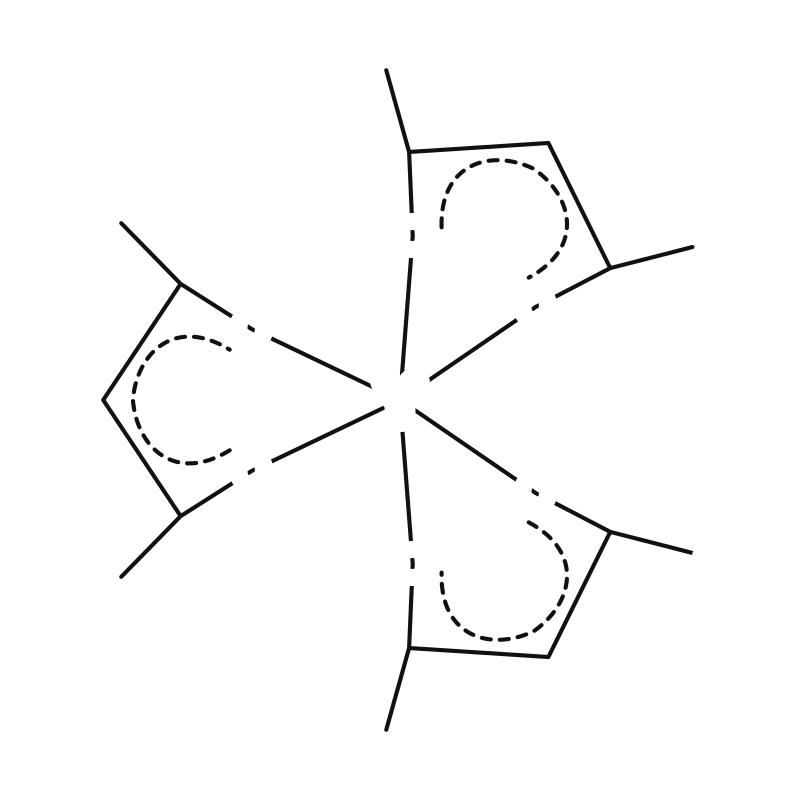
Chemical nameTris(2,2,6,6-tetramethyl-3,5-heptanedionato)yttrium(III)
High-purity yttrium beta-diketonate precursor for CVD and ALD of yttrium oxide and yttria-stabilized zirconia (YSZ) thin films. Critical for solid oxide fuel cells, thermal barrier coatings, and high-k dielectric stacks.
Also known as Y(TMHD)₃ · Yttrium(III) TMHD · Tris(2,2,6,6-tetramethyl-3,5-heptanedionato)yttrium · Y(thd)₃
Pricing and lead time are confirmed by quotation. Include the product name, quantity and intended application in your inquiry.
Request a quotationFor professional research and manufacturing. Follow the product-specific storage and handling requirements below and the Safety Data Sheet. Use appropriate personal protective equipment and ventilation.
Store under inert atmosphere at room temperature, protect from moisture
Tris(2,2,6,6-tetramethyl-3,5-heptanedionato)yttrium(III), abbreviated Y(TMHD)₃, is an yttrium beta-diketonate complex used as a precursor for chemical vapor deposition (CVD) and atomic layer deposition (ALD) of yttrium oxide (Y₂O₃) and yttria-containing composite films such as yttria-stabilized zirconia (YSZ). The TMHD ligand framework provides the volatility and thermal stability needed for reliable vapor-phase yttrium delivery across a broad range of deposition processes.
Y(TMHD)₃ co-deposited with Zr(TMHD)₄ is the classic CVD/ALD route to YSZ thin films — the gold-standard solid electrolyte for solid oxide fuel cells (SOFCs) and oxygen sensors, where precise 8–10 mol% yttria doping is required to stabilize the cubic fluorite phase.
Y₂O₃-stabilized ZrO₂ deposited from Y(TMHD)₃/Zr(TMHD)₄ mixtures provides thermal barrier coatings on turbine components and aerospace structures, exploiting the low thermal conductivity and phase stability of YSZ at elevated temperatures.
Y₂O₃ films and Y-doped HfO₂ dielectrics deposited from Y(TMHD)₃ are investigated as high-k gate dielectrics in advanced CMOS logic nodes, where yttrium doping modulates the dielectric constant and crystallization temperature.
Y₂O₃ is a wide-bandgap, optically transparent oxide used in UV-transmitting optical coatings, anti-reflection layers, and protective films on optical components for UV lithography and laser applications.
We offer Y(TMHD)₃ from research quantities (500g) to production scale with consistent quality. Custom packaging under inert atmosphere available. Glass packaging required for all orders.
Warning: This compound should be handled by qualified professionals in a laboratory environment. Store under inert atmosphere to prevent hydrolysis. Use appropriate PPE including gloves, safety glasses, and lab coat. Refer to SDS for complete safety information.
| Property | Specification |
|---|---|
| Purity | ≥99.0% |
| Appearance | White to off-white crystalline powder |
| Solubility | Soluble in organic solvents (toluene, THF, hexane) |
| Storage | Store under inert atmosphere at room temperature, protect from moisture |
Safety Data Sheet
Safety and handling informationProduct specification
Product limits and analytical requirementsCertificate of Analysis
Measured results for the supplied lotApplication context
TMHD ligand chemistry, ALD/CVD deposition parameters, and film characterization data.
US-manufactured, halide-free, CHIPS Act supply-chain ready
High-purity halide-free oxide deposition for AR and filter coatings
Halide-free cathode coatings for cycling stability