Biotinoyl Tripeptide-1
INCI: BIOTINOYL TRIPEPTIDE-1
Also known as: Biotin-GHK, Biotinyl-Gly-His-Lys, BTP-1
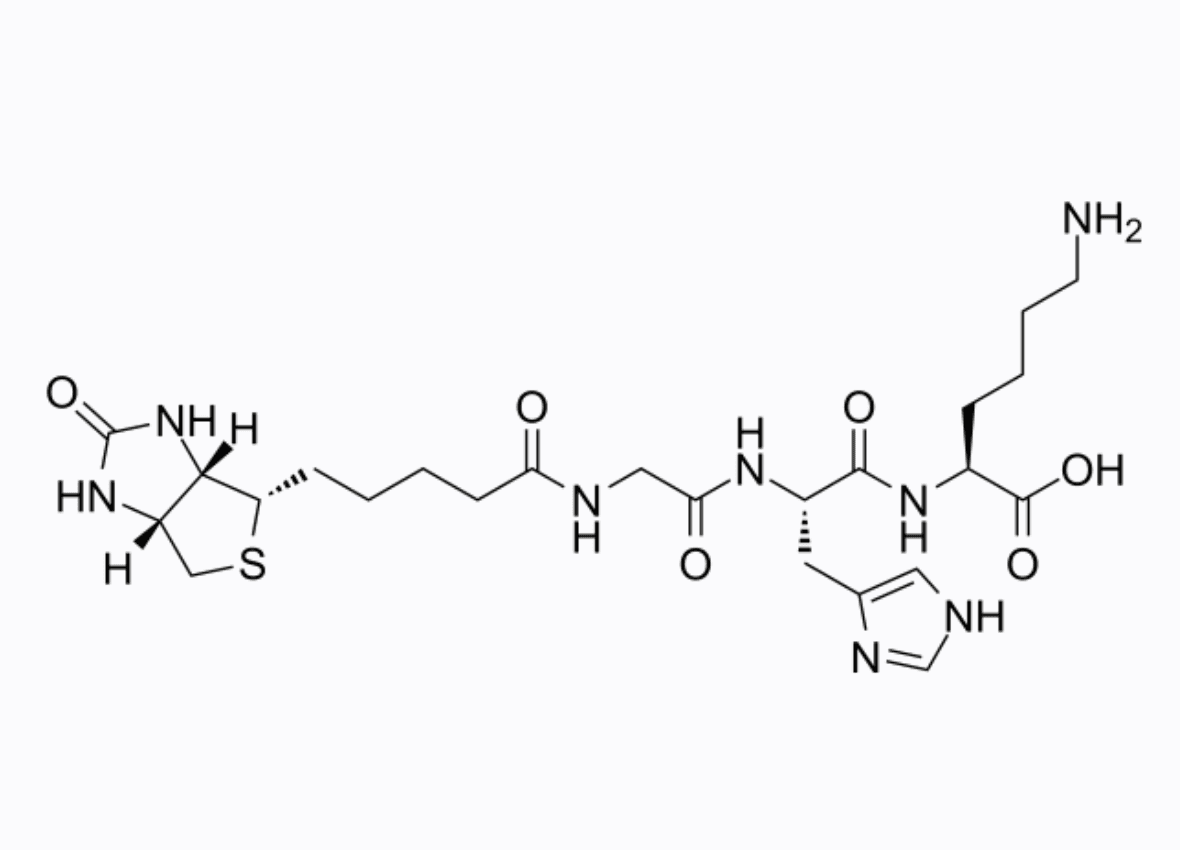
A biotinylated derivative of the GHK (Gly-His-Lys) tripeptide sequence. GHK is a well-characterized matrikine that supports ECM remodeling and dermal papilla signaling for hair enhancement applications.
Chemical Structure
Product Information
INCI Name
BIOTINOYL TRIPEPTIDE-1
Use Level
1–50 ppm (w/w)
Prices and lead time available upon request
Product Documents
Safety Data Sheet (SDS)
Available on request
Technical Data Sheet (TDS)
Available on request
Certificate of Analysis
Provided with order
Overview
Biotinoyl Tripeptide-1 is a synthetic cosmetic peptide consisting of biotin (vitamin B7) conjugated to the Gly-His-Lys (GHK) tripeptide sequence. GHK is a naturally occurring tripeptide found in human plasma, where it functions as a matrikine — a bioactive fragment released from ECM proteins during tissue remodeling. GHK is documented to modulate the expression of thousands of human genes, including pathways for ECM synthesis, growth factors, and anti-inflammatory signaling (Pickart & Margolina, 2018, Int J Mol Sci). The biotin conjugation enhances the peptide's stability and follicular substantivity compared to free GHK.
Mironova Labs supplies Biotinoyl Tripeptide-1 as a cosmetic active for use in hair enhancement serums, scalp fortification treatments, and premium hair care formulations.
Mechanism of Action
- ECM remodeling support — GHK-class peptides upregulate synthesis of structural proteins (collagen IV, laminin-5) in the dermal papilla basement membrane through gene expression signaling, supporting the follicular environment that sustains healthy hair cycling. Supplier ex vivo data shows Biotinoyl Tripeptide-1 preserved basement membrane protein integrity in cultured human follicles.
- Dermal signaling — GHK modulates gene expression in fibroblasts, upregulating genes associated with ECM maintenance, VEGF, bFGF, and tissue remodeling (Pickart & Margolina, 2018, Int J Mol Sci; independently validated by Campbell et al., 2012, Genome Medicine).
- Biotin delivery — The biotin moiety may contribute to local biotin availability in the follicle, supporting carboxylase enzyme activity involved in amino acid metabolism. However, specific pharmacokinetic tracking of localized biotin release from the conjugate has not been published.
- Hair retention support — In multi-ingredient clinical formulations (Procapil), Biotinoyl Tripeptide-1 has been associated with improvements in anagen/telogen ratio and reduced shedding. These results reflect the full complex, not the peptide as a standalone active.
Formulation Notes
- Functional over a wide concentration range (1–50 ppm); typical use in commercial serums is 5–20 ppm
- Highly water soluble — compatible with clear aqueous serums, tonics, and shampoo bases
- Stable at pH 4.5–7.5
- Pairs well with Myristoyl Pentapeptide-17 (keratin synthesis) and Kopyrrol Aqua (K⁺ channel) or Kopexil Aqua (collagen maturation) for a multi-mechanism formula
- Avoid formulating at pH > 8 or with strong oxidizing agents
Regulatory Information
Biotinoyl Tripeptide-1 is listed in INCI as BIOTINOYL TRIPEPTIDE-1. Formulators are responsible for compliance with applicable cosmetic regulations in their markets (EU Cosmetics Regulation 1223/2009, FDA voluntary cosmetic regulations, etc.).
Related Resources
Technical data, product specifications, and application guidance.
Questions About This Ingredient?
Our technical team can discuss specifications, sample requests, and custom synthesis options.