Non-Prostaglandin Hair Growth Science in 2026: What the Evidence Shows
A technical but readable map of PDPO, DPO, and OTZ: where the evidence is strong, where it is inferential, and how formulators should interpret claims responsibly.
Why Evidence Hierarchy Matters in Hair Science
The non-prostaglandin hair active category has grown rapidly over the past several years, driven partly by genuine scientific interest in alternative follicular mechanisms and partly by regulatory pressure on prostaglandin analogs in cosmetic applications. The EU Scientific Committee on Consumer Safety has concluded that several prostaglandin analogs — including MDN, isopropyl cloprostenate, and DDDE — cannot be considered safe for cosmetic use in lash and brow growth products. Health Canada already prohibits prostaglandins in cosmetics outright. In the United States, the FDA has issued warning letters and secured a $2.3 million settlement against companies marketing prostaglandin-containing products with drug-like claims.
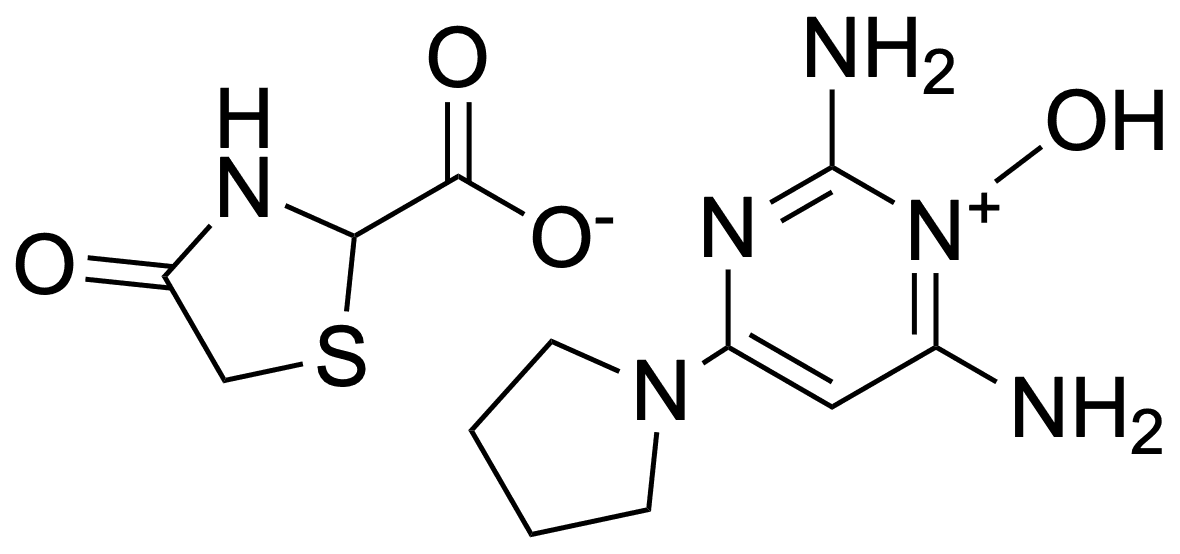
Against this regulatory backdrop, ingredients from the 2,4-diaminopyrimidine N-oxide class have attracted renewed attention. Three molecules in particular — PDPO (pyrrolidinyl diaminopyrimidine oxide), DPO (diaminopyrimidine oxide, commonly known as aminexil), and OTZ (L-2-oxothiazolidine-4-carboxylic acid, known as procysteine) — form the basis of a multi-target formulation strategy. But attention is not evidence, and the temptation to flatten complex pharmacology into simple marketing claims has created real problems in this space.
This article separates what is established in the peer-reviewed literature from what remains inferential, and examines what that distinction means for product development teams working in this category.
PDPO and the Minoxidil Analogy: Structural Proximity, Pharmacological Distance
PDPO (CAS 55921-65-8, MW 195.22) differs from minoxidil (CAS 38304-91-5, MW 209.25) by a single structural modification: a pyrrolidine ring at the C6 position where minoxidil carries a piperidine ring. Both compounds share the identical 2,4-diaminopyrimidine-3-oxide pharmacophore — the structural motif associated with potassium channel opening activity.
The biology of that pharmacophore is well established. Shorter et al. (2008, FASEB Journal) mapped ATP-sensitive potassium channel subunits across human hair follicle compartments, identifying Kir6.1/SUR2B channels in dermal papilla cells and connective tissue sheath, and Kir6.2/SUR1 channels in epithelial matrix keratinocytes. Minoxidil sulfate is selective for SUR2-containing channels, acting primarily on dermal papilla. The genetic validation is striking: Cantú syndrome, caused by gain-of-function mutations in ABCC9 (encoding SUR2), produces congenital hypertrichosis — direct proof that constitutive SUR2 activation promotes hair growth in humans.
Downstream, minoxidil's follicular effects are multi-modal. Lachgar et al. (1998, British Journal of Dermatology) demonstrated dose-dependent VEGF mRNA upregulation — up to approximately six-fold at 24 µM in dermal papilla cells. Kwack et al. (2011, Journal of Dermatological Science) showed that minoxidil activates β-catenin signaling in human dermal papilla cells via GSK3β phosphorylation. Marubayashi et al. (2001, Journal of Investigative Dermatology) identified SUR2B expression in dermal papilla cells and proposed adenosine-mediated signaling as an intermediary mechanism. At the proliferative level, minoxidil at 0.1–1.0 µM increases dermal papilla cell proliferation by 60–108% and activates ERK phosphorylation by 287–351%.
The problem is that none of this has been demonstrated for PDPO specifically. No published peer-reviewed study reports PDPO's EC₅₀ for K_ATP channel opening, its SUR subtype selectivity, whether it requires sulfotransferase activation (as minoxidil does via SULT1A1), or its effects on any isolated cell type or follicular tissue. The sole clinical evidence comes from multi-ingredient formulations — primarily the Spectral DNC-N study (Draelos et al., 2019, Skin Appendage Disorders), an open-label trial of 49 women using a product containing PDPO alongside azelaic acid, lysophosphatidic acid, copper tripeptide-1, adenosine, retinol, and caffeine. Attribution to PDPO is impossible.
The SAR Warning That Deserves More Attention
Structure-activity relationship data from Murad et al. (1992, Archives of Biochemistry and Biophysics) adds an important constraint: replacement of minoxidil's piperidine ring with pyrrolidine abolished lysyl hydroxylase inhibitory activity. This means PDPO likely does not share DPO's collagen-maturation mechanism. Whether K_ATP channel activity is similarly affected by the pyrrolidine substitution remains untested. Additionally, approximately 40% of minoxidil users are non-responders, linked to low SULT1A1 sulfotransferase activity (Goren et al., 2014, Dermatologic Therapy). Whether PDPO requires analogous metabolic activation is completely unknown.
The honest framing is this: PDPO is a structurally plausible K_ATP channel opener. Its membership in the pharmacologically active class remains a hypothesis, not an established fact. Product teams should position it as a contributor within combination systems, not as a standalone proven mechanism.
DPO and the Enzyme Identity Problem
DPO (2,4-diaminopyrimidine-3-oxide, CAS 74638-76-9) is the compound more commonly known as aminexil, developed and commercialized by L'Oréal beginning in the late 1980s. Its mechanism has been more directly studied than PDPO's, but it suffers from a different problem: widespread misidentification of its molecular target.
Lysyl Hydroxylase, Not Lysyl Oxidase
The foundational paper by Mahé et al. (1996, Skin Pharmacology) demonstrated that DPO retains strong inhibition of lysyl hydroxylase mRNA expression in vitro, even without the C6 substituent present in minoxidil. The mechanism is transcriptional — DPO reduces lysyl hydroxylase mRNA levels rather than directly inhibiting enzyme catalysis. No Ki or IC₅₀ values have been published. The original work by Murad and Pinnell (1987, Journal of Biological Chemistry) established that minoxidil suppresses lysyl hydroxylase activity in cultured fibroblasts at 25–500 µM, with recovery blocked by actinomycin D, confirming the transcriptional nature of the effect.
Lysyl hydroxylase (encoded by PLOD genes) is an Fe²⁺/2-oxoglutarate-dependent dioxygenase that hydroxylates lysine residues in collagen, enabling subsequent cross-link formation. Lysyl oxidase (LOX) is a completely different enzyme — a copper-dependent amine oxidase that catalyzes a later step in cross-linking via allysine formation. These are distinct proteins with distinct substrates, distinct cofactors, and distinct genomic locations. The conflation of "lysyl hydroxylase" with "lysyl oxidase" in marketing materials is not a semantic quibble; it represents a genuine scientific error that undermines credibility with the technical audience these products are being sold to.
Clinical Evidence Remains Formulation-Confounded
DPO is listed in EU Annex III (Entry 93) at a maximum concentration of 1.5% in hair care products, based on the SCCNFP opinion of 3 May 2000. The largest published study is Reygagne et al. (2021, Dermatologic Therapy), an international multicenter observational study of 527 subjects using Aminexil Clinical 5 — a multi-ingredient product. Results included an 82% reduction in pull test at day 90 in men (p < 0.01). However, the study was open-label, uncontrolled, and used a multi-ingredient formula, making attribution to DPO alone impossible. Multiple authors were L'Oréal employees.
In a mouse model, Jalilzadeh et al. (2024, BioImpacts) reported that 5% kopexil showed significantly higher hair weight, follicle count, anagen percentage, and VEGF/HGF expression compared to 5% minoxidil over 28 days. This is encouraging preclinical data, but animal model results do not automatically translate to human scalp outcomes.
No independent, placebo-controlled, DPO-monotherapy human trial with phototrichogram endpoints has been published.
OTZ: Strong Biochemistry, Unfinished Translation
OTZ (L-2-oxothiazolidine-4-carboxylic acid, CAS 19771-63-2, MW 147.15) is the best-characterized molecule in this trio from a biochemical standpoint, yet paradoxically the one with the least hair-specific evidence.
The 5-Oxoprolinase Pathway
Williamson and Meister (1981, Proceedings of the National Academy of Sciences) established OTZ as a substrate for 5-oxoprolinase (EC 3.5.2.9), demonstrating that OTZ administration to glutathione-depleted mice restored normal hepatic glutathione levels. They described OTZ as "an intracellular delivery system for cysteine." The mechanism is clean: 5-oxoprolinase cleaves OTZ in an ATP-dependent reaction, yielding an unstable S-carboxycysteine intermediate that spontaneously decarboxylates to L-cysteine and CO₂. Cysteine then enters the two-step glutathione biosynthesis pathway as the rate-limiting substrate.
Clinical Evidence for GSH Elevation
The head-to-head ARDS trial by Bernard et al. (1997, Chest, n=46, randomized, double-blind, placebo-controlled) showed a 49% increase in red blood cell glutathione with intravenous OTZ — comparable to the 47% increase seen with NAC. Oral dosing up to 9 g/day for two years was safe with no significant clinical pathology changes. OTZ has been studied in HIV, ALS, coronary artery disease, and peritoneal dialysis contexts (Moberly et al., 1998, Journal of the American Society of Nephrology).
Key advantages over NAC include superior chemical stability, neutral taste and odor, purely intracellular activation (no extracellular thiol reactivity), and better bioavailability. In neonatal toxicity studies, OTZ showed dramatically lower toxicity than equimolar free cysteine — 10% versus 80% mortality at equivalent cysteine-delivering doses.
The Translation Gap
Despite this robust systemic pharmacology, no published peer-reviewed study has examined topical OTZ on human scalp or hair follicle tissue. The mechanistic rationale — cysteine supports keratin synthesis via disulfide cross-links, glutathione provides antioxidant defense against ROS-mediated follicular damage — is sound but unvalidated in the specific tissue context.
Jacques et al. (2021, International Journal of Cosmetic Science) demonstrated that OTZ formulated in a sunscreen emulsion was rapidly absorbed through reconstructed human epidermis, providing the most directly relevant evidence for topical OTZ penetration and antioxidant activity in a cosmetic context. This is encouraging for delivery feasibility, but it is not a scalp-specific study.
The connection to AGA pathology is indirect but coherent: Shin et al. (2013, BMB Reports) showed that reactive oxygen species mediate androgen-induced TGF-β1 expression in dermal papilla cells. If OTZ can deliver cysteine to follicular tissue and support local glutathione levels, it could theoretically dampen the ROS-TGF-β1 axis. But "theoretically" is the operative word.
Evidence Limits Worth Stating Explicitly
Responsible product development in this category requires acknowledging specific evidence boundaries:
- PDPO-specific pharmacological data does not exist in published literature. No electrophysiology, no EC₅₀, no SUR selectivity, no monotherapy clinical trials.
- DPO's molecular target is lysyl hydroxylase, not lysyl oxidase. Marketing materials that use "LOX inhibitor" language are citing an enzyme that has not been shown to be the target in published peer-reviewed studies.
- DPO clinical evidence is entirely from multi-ingredient formulations. No independent, controlled, DPO-monotherapy human RCT has been published.
- OTZ scalp-specific data is absent. The biochemistry is robust; the tissue-specific translation is an open question.
- Dual-active salt bioavailability has not been directly demonstrated. Whether both the active base and the OTZ counterion reach effective intracellular concentrations from topical application is an evidence gap for both Kopyrrol Aqua and Kopexil Aqua.
The Multi-Target Rationale: Plausible but Unproven Complementarity
The three mechanisms map to distinct pathological axes in androgenetic alopecia. K_ATP channel opening (PDPO) addresses the vascular and proliferative axis — vasodilation, VEGF signaling, dermal papilla proliferation. Lysyl hydroxylase inhibition (DPO) addresses the structural and fibrotic axis — reducing collagen cross-linking maturation in the perifollicular environment. Cysteine and glutathione support (OTZ) addresses the oxidative and metabolic axis — ROS scavenging and keratin substrate delivery.
This multi-target framing is mechanistically rational. Liu et al. (2025, Nature Reviews Disease Primers) characterize AGA as multifactorial, involving androgen signaling, genetic susceptibility, Wnt pathway modulation, and inflammatory-fibrotic remodeling. A single-mechanism approach is unlikely to address this complexity adequately.
However, complementarity between these specific ingredients at cosmetically relevant concentrations and in topical delivery formats has not been experimentally demonstrated. The synergy narrative is a hypothesis, not established fact. Formulators who build programs around this rationale should design studies capable of testing it rather than assuming it.
What This Means for Product Development in 2026
The strongest non-prostaglandin programs being built today share a common characteristic: they separate evidence tiers explicitly in their technical communication. They frame PDPO as a structurally plausible K_ATP-class ingredient with a promising but unvalidated pharmacological profile. They describe DPO's mechanism accurately — as lysyl hydroxylase transcriptional modulation, not LOX inhibition. They present OTZ as a well-characterized cysteine prodrug with systemic proof of concept and plausible topical relevance.
This approach is not merely conservative branding. In a regulatory environment where the FDA defines classification by intended use and the EU is actively restricting prostaglandin analogs based on safety evidence gaps, the capacity to make precise, evidence-bounded claims is a structural advantage. It reduces legal risk, accelerates regulatory review, builds trust with sophisticated B2B buyers, and — perhaps most importantly — creates a foundation for genuine clinical substantiation programs that can strengthen claims over time rather than defending overclaims retroactively.
The data gaps identified here are not reasons to avoid these ingredients. They are reasons to invest in the specific studies — K_ATP electrophysiology for PDPO, salt-form bioavailability and skin delivery profiling, controlled monotherapy clinical trials — that would move the evidence base from plausible to proven. The market opportunity created by prostaglandin regulatory pressure is real. The question is whether teams will pursue it with the scientific discipline it deserves.