Ergothioneine and OCTN1: Transporter Biology, Not Marketing Hype
Why ergothioneine remains compelling science: dedicated transporter logic, mitochondrial relevance, and a realistic read of human data.
Beyond the Antioxidant Label
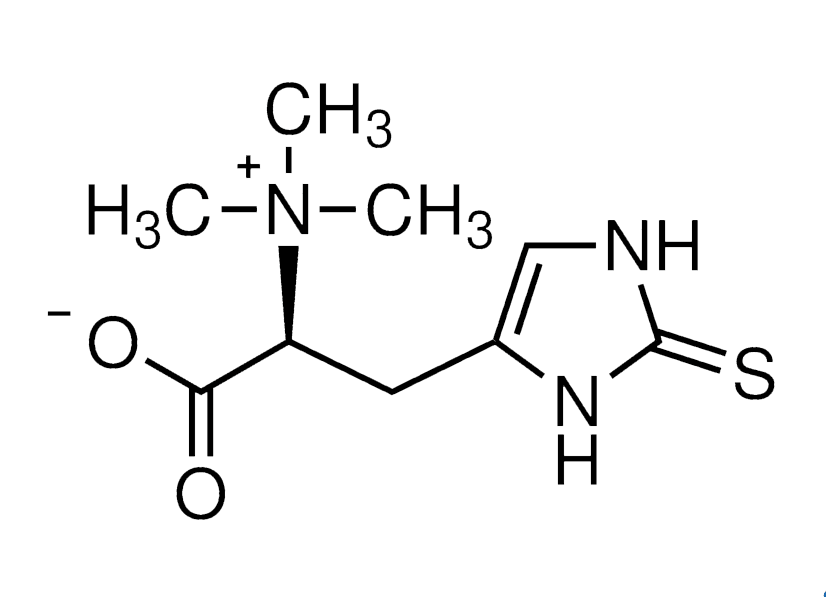
Ergothioneine is easy to position incorrectly. The temptation is to slot it into the "another antioxidant" category — alongside vitamin C, vitamin E, resveratrol, and a growing list of compounds that compete on radical-scavenging capacity claims. That framing sells short the most interesting thing about this molecule: it has a dedicated human transporter, and that transporter fundamentally changes what we can and should say about its biology.
The transporter story does not prove every longevity claim currently circulating in commercial materials. What it does is elevate ergothioneine from the crowded antioxidant commodity space into a genuinely distinct mechanistic category — one where tissue-specific accumulation is active, not passive, and where the evolutionary conservation of a specialized uptake system suggests biological importance that goes beyond general redox buffering.
This article examines what the transporter biology actually tells us, where the human evidence is credible, and where commercial narratives have outrun the data.
OCTN1: A Transporter That Redefines the Category
The Basic Biology
The ergothioneine transporter, historically labeled OCTN1 and encoded by the gene SLC22A4, mediates active uptake and concentration of dietary ergothioneine into human cells and tissues. This is not passive diffusion through membranes — it is a dedicated transport system that selectively recognizes ergothioneine and drives its accumulation in tissues exposed to oxidative and inflammatory stress.
Multiple independent reviews have concluded that OCTN1 functions effectively as an ergothioneine-specific transporter under physiological conditions. While OCTN1 can transport other substrates in vitro, ergothioneine appears to be its primary physiological cargo — a conclusion supported by the observation that OCTN1 expression patterns across tissues correlate closely with ergothioneine tissue distribution.
Why the Transporter Matters for Positioning
The transporter argument changes the scientific conversation in three ways.
First, it explains accumulation. Most dietary antioxidants are present in tissues at concentrations determined by passive partitioning. Ergothioneine concentrations in specific tissues — particularly those with high metabolic activity and oxidative stress exposure — reflect active transport and retention, not equilibrium chemistry. This means tissue levels can be meaningfully higher than what passive distribution would predict.
Second, it implies biological selection. The evolutionary pressure required to maintain a specific transport system across mammalian lineages suggests that ergothioneine serves a function important enough to justify the metabolic cost of active uptake. This is the core of Bruce Ames's argument for classifying ergothioneine as a "longevity vitamin" — a proposal he articulated in his 2018 synthesis, where he explicitly included ergothioneine among putative candidates for nutrients that, when chronically insufficient, accelerate age-associated pathology through under-serving of "longevity proteins" while triaging toward immediate survival functions.
Third, it predicts stress-dependent phenotypes. OCTN1 knockout or transporter depletion models typically show minimal phenotype at baseline but demonstrate worse outcomes under oxidative or inflammatory challenge — consistent with a resilience nutrient rather than an acute-deficiency nutrient. This is why ergothioneine does not produce the rapid, overt deficiency syndromes that define classical vitamins. Its insufficiency is silent until stress burdens rise.
Mitochondrial Protection: The Paul and Snyder Work
The Core Experiment
The most frequently cited cellular demonstration of ergothioneine's protective biology comes from Paul and Snyder at Johns Hopkins, who used transporter knockdown to reduce cellular ergothioneine uptake and measured susceptibility to oxidative stress. In cells with normal OCTN1 expression, ergothioneine pretreatment substantially blunted mitochondrial DNA damage (measured by quantitative PCR of a D-loop "hotspot" region) following hydrogen peroxide challenge. When the transporter was depleted, this protection was lost.
This experiment is important because it establishes transporter dependence — the protection requires active cellular uptake of ergothioneine, not merely extracellular presence. It also establishes mitochondrial DNA as a relevant endpoint, which connects to the broader aging biology where accumulated mtDNA damage contributes to mitochondrial dysfunction, cellular senescence, and tissue-level aging phenotypes.
The "70% Reduction" Claim
Marketing materials sometimes cite "up to 70% reduction in mtDNA damage." The canonical mechanistic paper shows a substantial protective effect, but the exact percentage depends on how damage is operationalized from the depicted qPCR readouts. For scientific credibility, it is more defensible to state that ergothioneine significantly reduces oxidant-induced mitochondrial DNA damage in transporter-competent cells, and that this protection is transporter-dependent, rather than hard-coding a single percentage across contexts and cell types.
Independent support comes from UV/skin models showing protection against a photoaging-associated mtDNA "common deletion" in fibroblasts exposed to UVA — reinforcing that mtDNA-related endpoints are responsive to ergothioneine in stress-relevant experimental systems.
The 2025 Mechanistic Update: H₂S, Persulfidation, and NAD⁺
Beyond Scavenging
The most strategically important mechanistic development in recent years moves ergothioneine's biology beyond radical scavenging entirely. A 2025 multi-institution study, published in Cell Metabolism by a team associated with the Leibniz Institute for Analytical Sciences, reported that ergothioneine improved healthspan phenotypes across multiple model systems and — critically for metabolic positioning — was accompanied by higher NAD⁺ levels in aged rat muscle.
The proposed mechanism involves ergothioneine acting as an alternative substrate for cystathionine gamma-lyase (CSE), increasing hydrogen sulfide (H₂S) production and driving broad protein persulfidation. Activation of cytosolic glycerol-3-phosphate dehydrogenase (cGPDH) is described as a primary contributor to the observed NAD⁺ increase. The effects were abolished in models lacking CSE or cGPDH, supporting pathway specificity rather than nonspecific antioxidant buffering.
What This Means for Product Narratives
This work supports a repositioning away from commodity antioxidant rhetoric toward what might be called precision longevity biochemistry. The narrative is no longer "ergothioneine scavenges free radicals" — it is "ergothioneine engages stress signaling and metabolic coupling systems through a transporter-dependent, enzymatically mediated mechanism that connects to NAD⁺ biology."
The distinction matters commercially because it provides differentiation from generic antioxidant ingredients and connects to the NAD⁺/NMN/NR consumer interest space through a mechanistically distinct pathway. Ergothioneine reaches NAD⁺ through H₂S/persulfidation/cGPDH, while NMN and NR reach NAD⁺ through salvage pathway precursor supply. This creates a credible "mechanistically complementary" framing — but not a proven synergy claim, which would require controlled combination experiments with interaction statistics that have not been published.
Human Evidence: What Holds Up Under Scrutiny
The Malmö Cohort (n=3,236, ~21 Years Follow-up)
The strongest single epidemiologic anchor for the "longevity" positioning comes from the Malmö Diet and Cancer cohort. In a prospective analysis examining 112 fasting plasma metabolites, ergothioneine was reported as the metabolite most strongly connected to a healthy dietary pattern and was associated with lower risk of coronary disease, cardiovascular mortality, and all-cause mortality.
Per 1 SD increment of ergothioneine, the reported hazard ratios include approximately 0.85 for coronary disease, 0.79 for cardiovascular mortality, and 0.86 for all-cause mortality (with sex/age-adjusted models showing hazard ratios of approximately 0.80, 0.76, and 0.82 respectively). The authors explicitly concluded that ergothioneine was an independent marker of lower cardiometabolic morbidity and mortality.
This is strong observational evidence. It links ergothioneine status to hard clinical outcomes — mortality, not surrogate markers — over a follow-up period long enough to be meaningful. But observational evidence cannot establish causality. The appropriate claim is "associated with lower mortality risk," not "reduces mortality." The authors themselves called for controlled intervention studies to test the causal hypothesis.
The Singapore Memory Clinic Cohort (n=470, 5 Years)
A longitudinal study in National University of Singapore-linked memory clinic subjects found that lower baseline plasma ergothioneine was associated with poorer baseline cognition and faster decline in multiple cognitive domains, with mediation analyses suggesting that part of the relationship is explainable by cerebrovascular disease burden and brain atrophy markers.
This supports ergothioneine as both a potential blood-based biomarker for cognitive decline risk and a biologically plausible intervention target. It does not prove that supplementation slows decline — a critical distinction that should appear in any commercial communication referencing this data.
The 16-Week RCT (n=147, 10 and 25 mg/day)
A randomized, double-blind, placebo-controlled trial in adults aged 55–79 with subjective memory complaints tested daily ergothioneine at 10 mg and 25 mg for 16 weeks. The results are mixed and require careful interpretation.
The primary cognitive composite showed within-group improvement at week 4 for the 25 mg group that was not sustained and did not clearly separate from placebo across the full study period. Several cognitive domains showed null or limited effects. This is not the kind of result that supports strong efficacy claims.
However, the trial provides genuinely valuable data:
- Clear, dose-dependent pharmacokinetics: Plasma ergothioneine rose by approximately 3-fold and 6-fold at weeks 4 and 16 in the 10 mg group, and approximately 6-fold and 16-fold in the 25 mg group. This establishes that low milligram doses reliably and substantially increase circulating levels.
- Signal in subjective prospective memory and sleep initiation: Dose-dependent improvements significant at 25 mg, aligning with a "cognitive resilience plus sleep quality" positioning that is more defensible than a hard neuroprotection claim.
- Safety and tolerability: No product-related adverse events. No increase in plasma TMAO. Exploratory signals including changes in liver enzyme trends and within-group telomere length increases (to be interpreted cautiously).
The honest summary: ergothioneine reliably raises circulating levels at low milligram doses, appears safe in older adult studies, and shows early signals in subjective memory, sleep, and certain neurodegeneration-adjacent biomarkers. Larger, longer, and better-targeted trials are needed to confirm robust cognitive disease-modifying effects.
Regulatory Landscape: Cleared for Commerce, Not for Drug Claims
United States
Ergothioneine is Generally Recognized As Safe (GRAS, self-affirmed) for use as a food ingredient. Under US FDA regulations, manufacturers establish safe use levels based on intended applications, such as 5 to 25 mg per serving across specified food categories. This status enables commercial use in conventional foods and dietary supplements.
Recent developments in engineered microbial synthesis have broadened manufacturing-route coverage for commercial use, achieving specifications of ≥99% purity while maintaining safety and intended-use framing consistent with GRAS evaluation norms.
European Union
Commission Implementing Regulation (EU) 2018/462 authorizes L-ergothioneine as a novel food ingredient with defined conditions. Maximum supplement daily levels are set at 30 mg/day for the general adult population (excluding pregnant and lactating women) and 20 mg/day for children older than 3 years. Category-specific maximum levels apply to beverages, milk-based drinks, fresh milk products, cereal bars, and chocolate confectionery. Labeling must designate the ingredient as "L-ergothioneine."
An EFSA-linked scientific opinion concludes synthetic L-ergothioneine (Ergoneine) is safe under intended conditions of use, referencing NOAEL-based margin-of-safety logic.
What Cannot Be Claimed
In both jurisdictions, disease claims ("prevents Alzheimer's," "reduces cardiovascular mortality") are not permitted for food ingredients or dietary supplements without drug approval. Structure-function claims in the US require notification and must be truthful and not misleading. EU health claims require EFSA authorization. The human evidence base — while scientifically interesting — does not currently support authorized health claims in either jurisdiction.
Where Caution Is Required
Several claims appearing in commercial ergothioneine marketing exceed what the published evidence supports:
- "Synergistic with NMN/NR": Mechanistic complementarity is plausible (different pathways to NAD⁺). Proven synergy requires controlled combination experiments that have not been published. The defensible claim is "mechanistically complementary," not "synergistic."
- "3x intracellular vitamin C": This appears in some supplier materials but is not substantiated by publicly accessible controlled studies with defined cell types, baselines, and statistical analysis. Until publishable data supports it, this claim should be treated as proprietary and unverified.
- "Reverses cognitive decline": The RCT showed early signals in subjective memory and sleep, not reversal of objective cognitive decline. The observational cohort showed association, not causation. Claims should reflect these distinctions.
- "Reduces mortality": The Malmö data shows association between higher ergothioneine status and lower mortality risk. This is not the same as demonstrating that supplementation reduces mortality. The causal step requires intervention trials that have not been completed.
What Makes Ergothioneine Genuinely Different
Strip away the overclaims and what remains is still remarkably strong. Very few dietary bioactives can claim all of the following simultaneously:
- A dedicated human transporter (OCTN1/SLC22A4) that actively concentrates the molecule in metabolically vulnerable tissues
- Transporter-dependent mitochondrial DNA protection demonstrated in controlled cellular experiments
- A mechanistic connection to H₂S signaling and NAD⁺ metabolism established in 2025 through pathway-specific genetic controls
- Epidemiologic association with hard mortality endpoints in a large prospective cohort over two decades of follow-up
- An RCT demonstrating reliable, dose-dependent pharmacokinetics and acceptable safety at supplementation-relevant doses
- Regulatory clearance for commercial use in both the US and EU
That combination of properties — transporter-guided tissue targeting, mechanistic depth beyond radical scavenging, epidemiologic signal, and regulatory readiness — is genuinely distinctive. The most durable product narratives will be built by teams that communicate these strengths precisely and resist the temptation to extend them into claims the evidence cannot yet support.
In 2026, scientific credibility comes less from declaring certainty and more from demonstrating that you can distinguish strong signals from unresolved questions. Ergothioneine is an excellent test case for that discipline — because the real science is interesting enough that it does not need embellishment.